

Schedule a CEU Presentation
Interested in learning more about Arbor Wood Co. and earning CEU credits. We have two accredited AIA presentations. Fill out the form below to schedule a presentation.
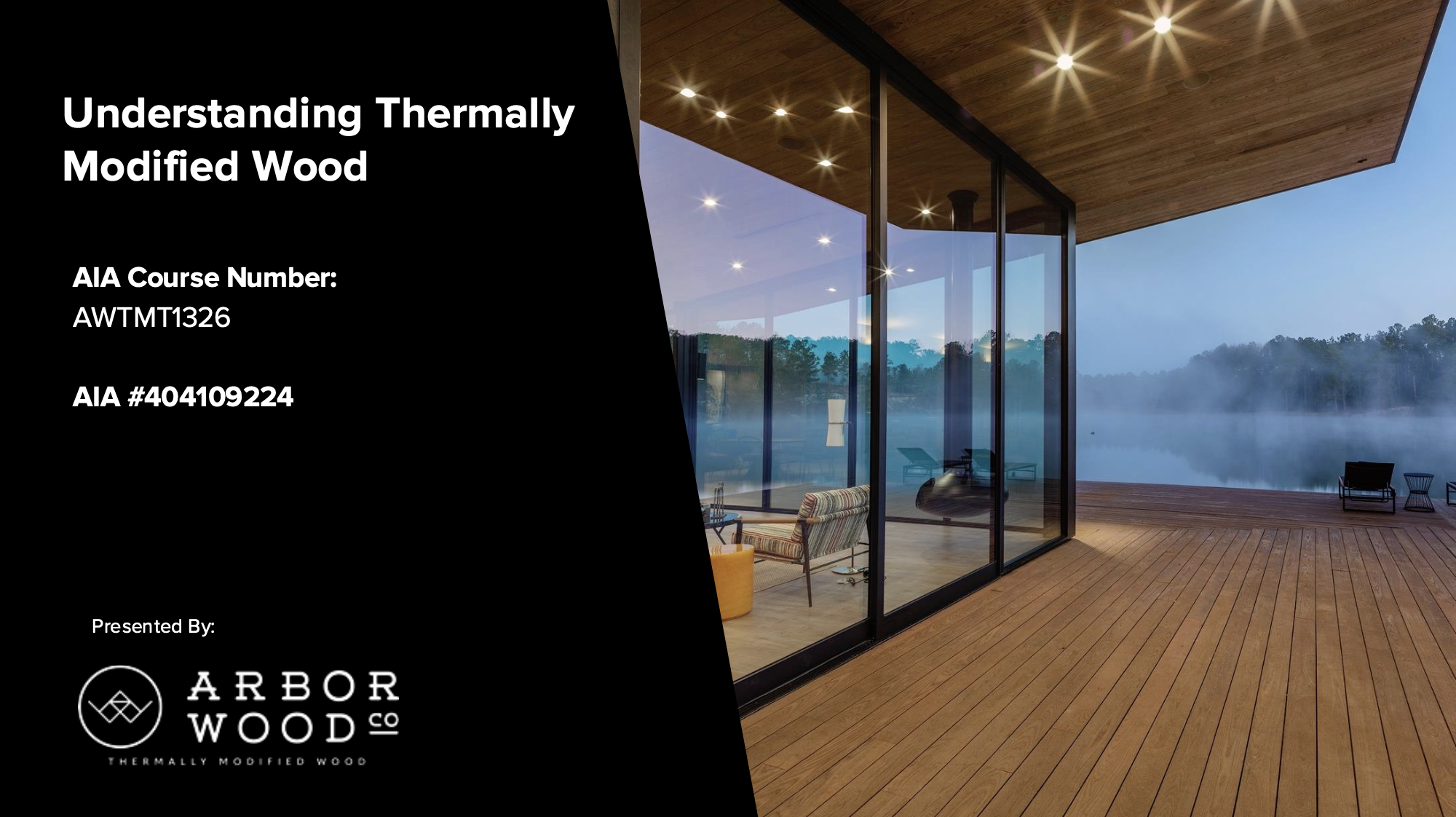
COURSE DESCRIPTION - UNDErstanding Thermally Modified Wood
Advancements in technology allow domestically and responsibly sourced wood to be used on exterior applications which are typically unforgiving to a natural product. This course will describe the basic components of a wood cell wall and define how modification affects these components. The natural processes used to modify wood for improved durability will be discussed, with an emphasis on thermal modification. Suitable applications for modified wood will be explored along with an understanding of how these products can reduce embodied carbon and contribute to LEED objectives.
Learning objectives
This presentation will provide the attendee with a basic understanding of:
Components of a wood cell wall
Wood modification definition
Identify four types of wood modification with an emphasis on TMW (Thermally Modified Wood)
Discuss the ThermoWood process and the features and benefits realized
Understand applications for TMW
Display an understanding of how TMW can contribute to LEED objectives
Gain knowledge of CSI standard specifications for thermally modified wood products
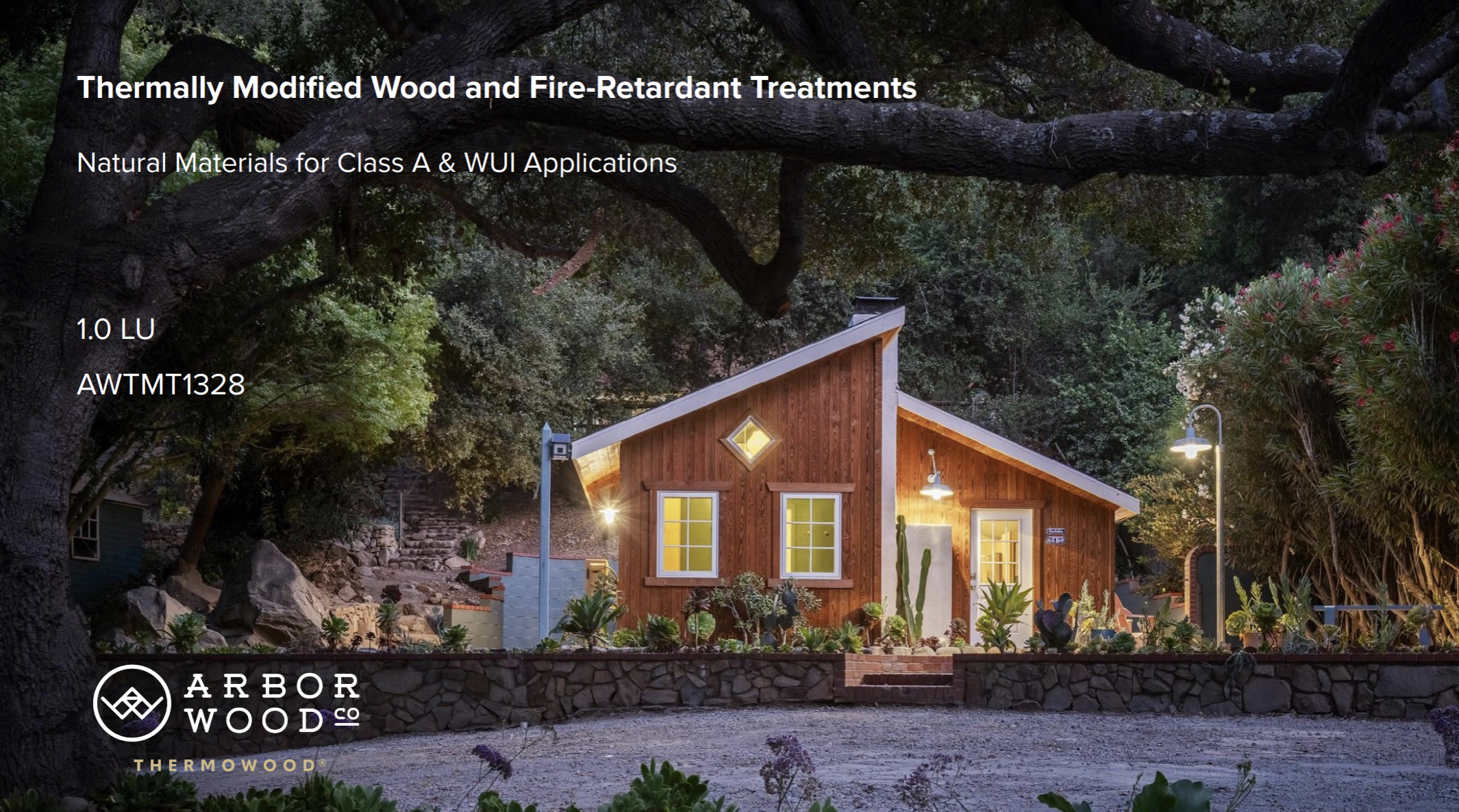
COURSE DESCRIPTION - Thermally Modified Wood And Fire Retardant Treatments
This course explores the performance of thermally modified wood and fire-retardant treated wood in architectural applications requiring enhanced fire protection and performance. Participants will learn how natural wood materials can meet stringent fire requirements—including Class A flame spread ratings and Wildland-Urban Interface (WUI) compliance—while supporting sustainability and biophilic design goals. The course reviews thermal modification processes, fire testing standards, code pathways, and specification strategies for exterior cladding, decking, and architectural elements.
Learning objectives
1. Explain the thermal modification process and how it changes wood performance characteristics.
2. Identify fire testing standards and classifications, including Class A ratings under ASTM International standards such as ASTM E84.
3. Understand how fire-retardant treatments enable wood to meet WUI and ignition-resistant code requirements.
4. Evaluate specification strategies for natural wood materials in high fire-risk projects.