

Thermo-D vs Thermo-S; What is the Difference?
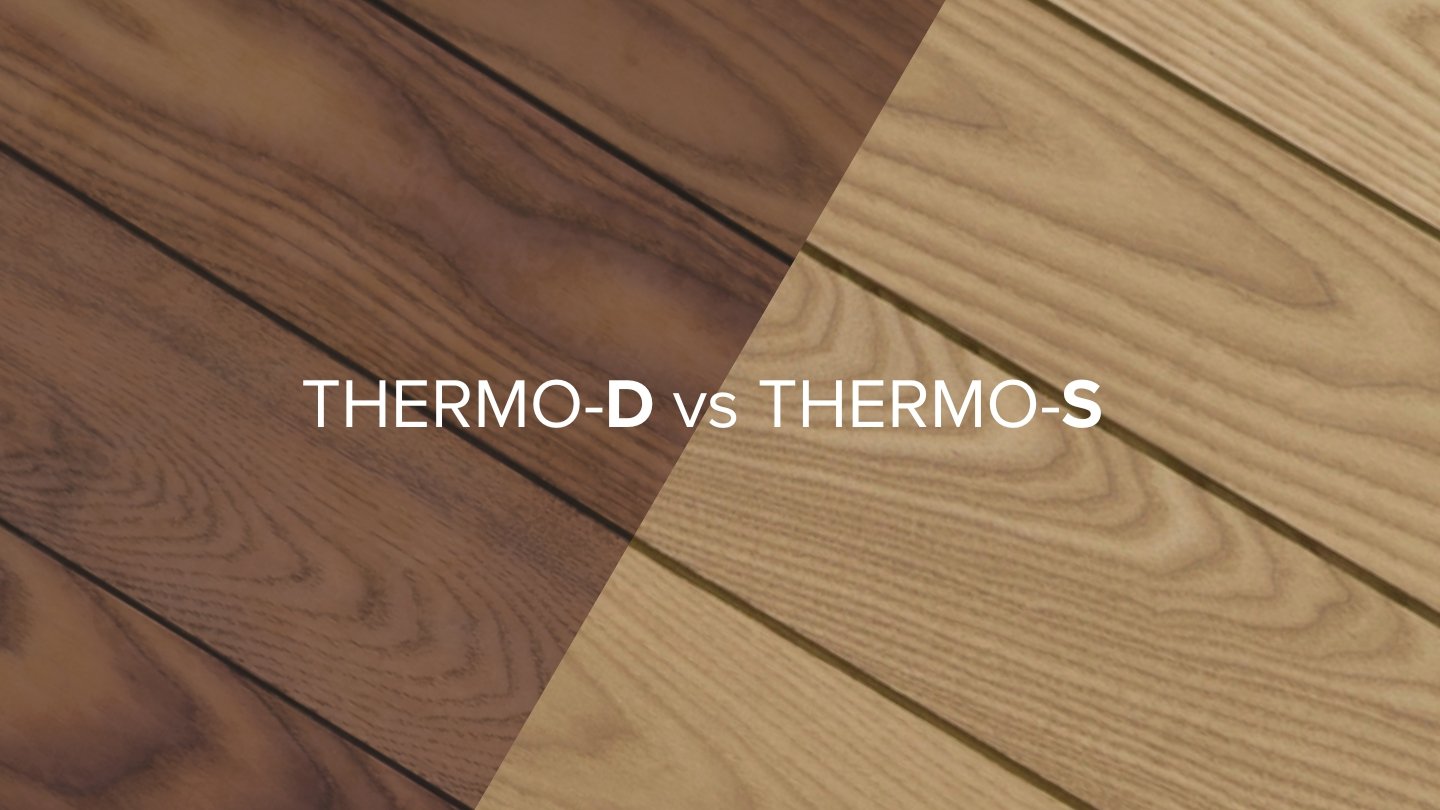
Understanding the Two Paths of Thermowood®
Thermally modified wood has become a trusted material choice for architects and builders who want the beauty of real wood with improved durability, stability, and sustainability. But not all thermal modification is the same. At Arbor Wood Co, we work with two primary types of thermal modification—Thermo-D and Thermo-S—each designed for different performance needs and use cases. Understanding the difference between these helps ensure the right material is selected for the right application.
Let’s break it down.
What Is Thermal Modification?
Thermal modification is a chemical-free process that uses heat and steam to permanently alter the structure of wood. By heating lumber to high temperatures in a controlled environment, the process:
Reduces the wood’s ability to absorb moisture
Improves dimensional stability
Enhances resistance to rot and decay
Deepens the natural color of the wood
The key difference between Thermo-S and Thermo-D lies in how hot the wood is treated—and what performance characteristics that creates.
Thermo-S: Stability First
Thermo-S (S = Stability) is modified at lower temperatures, typically around 190°C (374°F).
Key Characteristics
Significantly improved dimensional stability
Reduced swelling and shrinkage
Retains more of the wood’s original strength
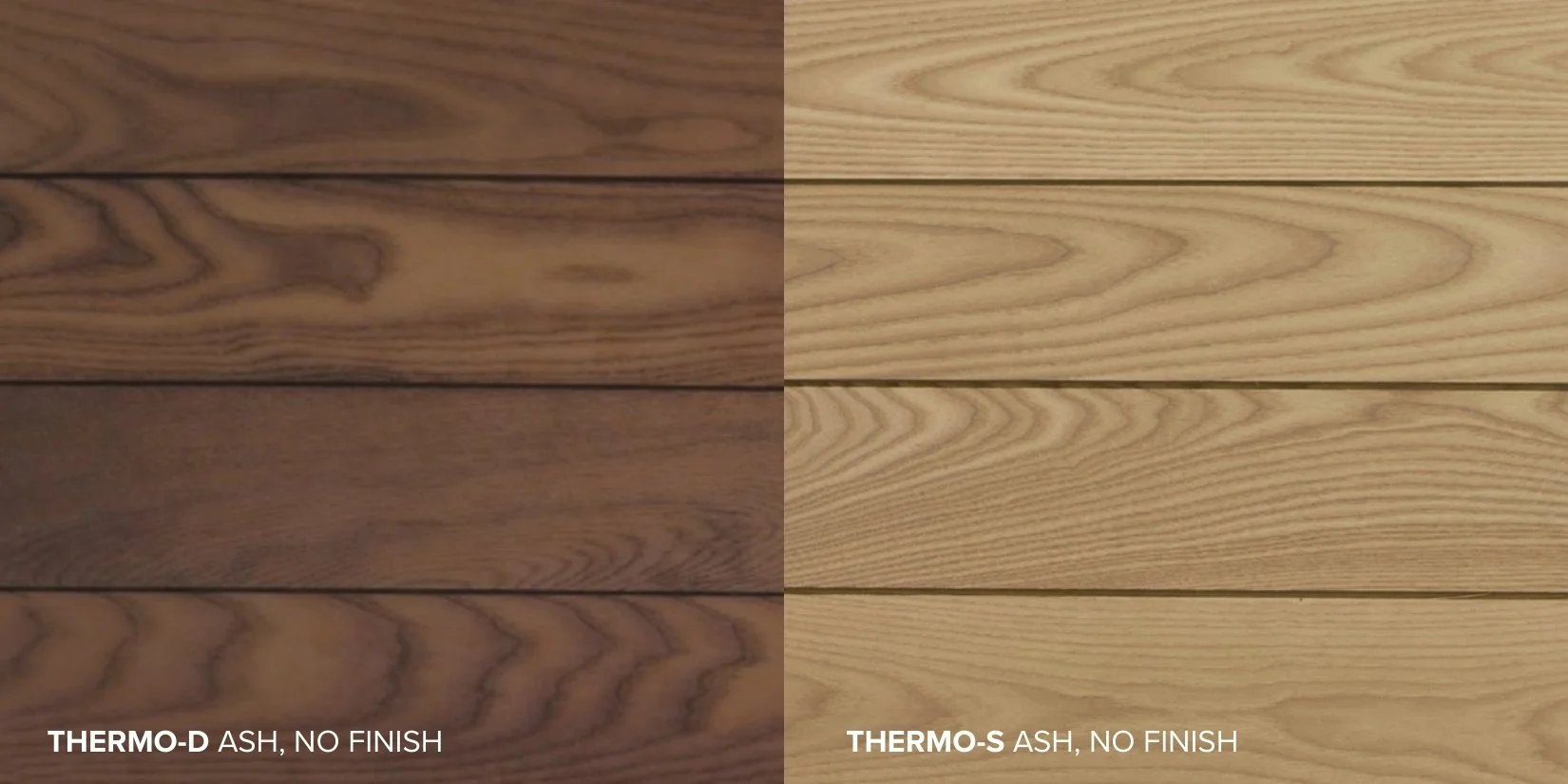
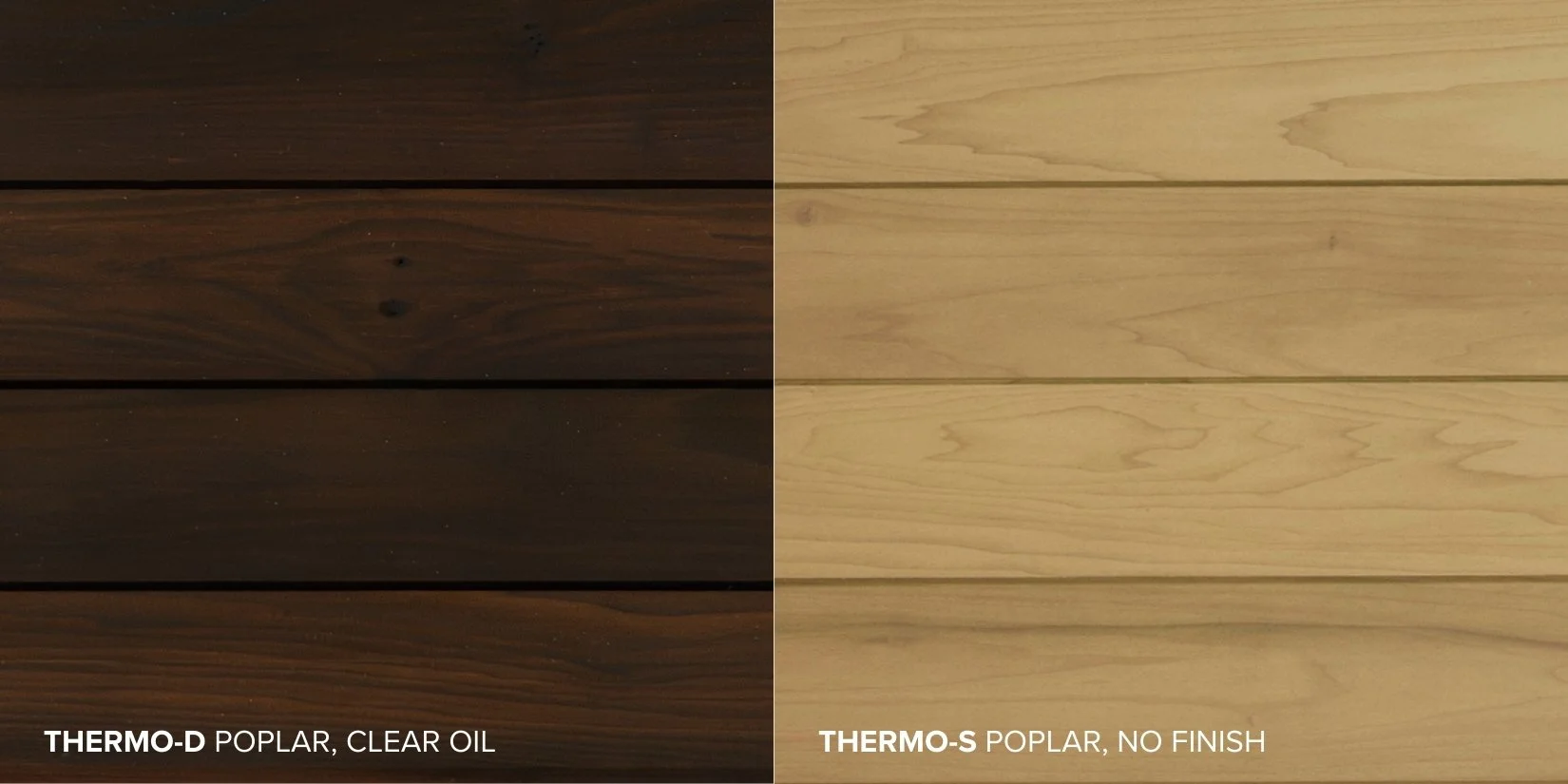
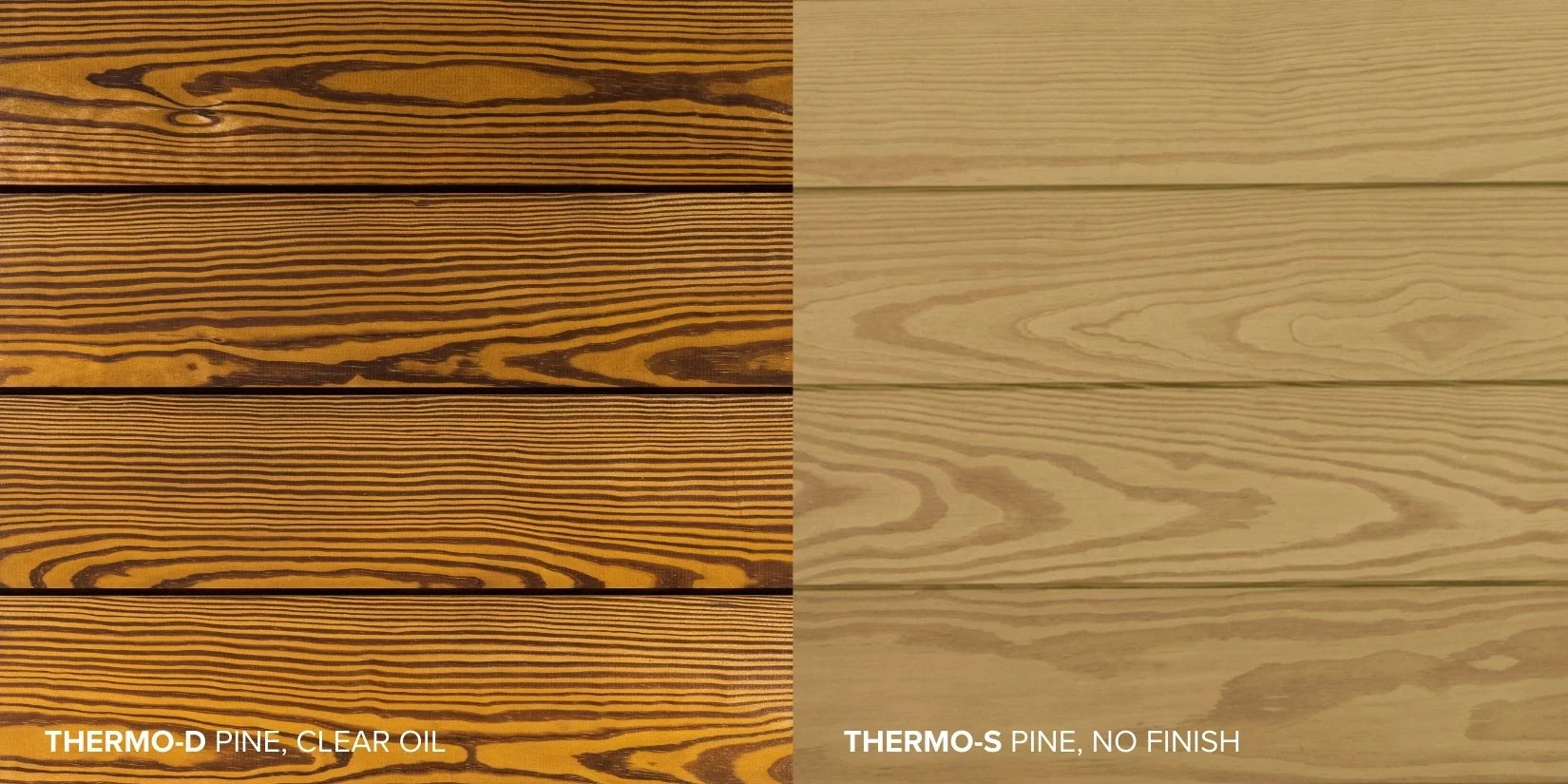
Subtle, warm color enhancement (more blonde than brown)
Best Applications
Thermo-S is ideal where precision, flatness, and long-term stability matter most:
Interior wall and ceiling cladding
Millwork and cabinetry components
Sauna interiors
Architectural applications with controlled environments
Think of Thermo-S as refinement: wood that moves less, stays truer, and performs beautifully indoors.
Thermo-D: Durability Driven
Thermo-D (D = Durability) is modified at higher temperatures, typically around 212°C (414°F).
Key Characteristics
Maximum resistance to decay and rot
Excellent moisture resistance
Deeper, richer brown tone throughout the board - More caramelization of the sugars in the wood
Reduced biological activity (fungi and insects)
Best Applications
Thermo-D is designed for exterior and high-exposure environments:
Exterior siding and cladding
Rain screens and facades
Decking and soffits
Outdoor architectural elements
Areas subjected to high humidity and moisture
With Thermo-D, the priority shifts from strength retention to long-term weather resistance and longevity—all without chemical preservatives.
Choosing the Right Modification
Application Type / Recommended Option
Interior cladding & ceilings / Thermo-S
Exterior siding & facades / Thermo-D
Exterior furniture / Thermo-D
High-moisture outdoor environments / Thermo-D
Precision interior millwork or furniture / Thermo-S
Selecting the correct modification ensures the wood performs as intended for decades—not just at installation.
Sustainability at the Core
Both Thermo-S and Thermo-D align with Arbor Wood Co.’s commitment to responsible material sourcing:
100% chemical-free process
Long service life reduces replacement cycles
Uses responsibly sourced North American species
Fully recyclable and biodegradable
Thermal modification enhances wood using heat—not additives—making it one of the most sustainable material upgrades available in modern architecture.
Final Thoughts
Thermo-S and Thermo-D aren’t better or worse than one another—they’re purpose-built solutions. When specified correctly, both deliver exceptional performance, longevity, and the unmistakable warmth of real wood.
If you’re evaluating a project and unsure which thermal modification is right, Arbor Wood Co. can help guide the decision—ensuring the material aligns with both the design intent and the environmental conditions.