

From Forest to Façade: The Journey of American-Made Thermowood®
A Collaboration Between Arbor Wood Co. And Baillie Lumber

Thermally modified wood doesn’t begin in a kiln or a factory—it begins in the forest. Long before a finished board reaches a building façade, it passes through a carefully coordinated supply chain shaped by forestry expertise, material science, and craftsmanship.
At Arbor Wood Co. and Baillie Lumber, we believe that understanding this journey matters. The performance, beauty, and longevity of thermally modified wood are the direct result of intentional decisions made at every step—from tree selection to final milling. This is the story of how a tree becomes a durable, design-forward building material.
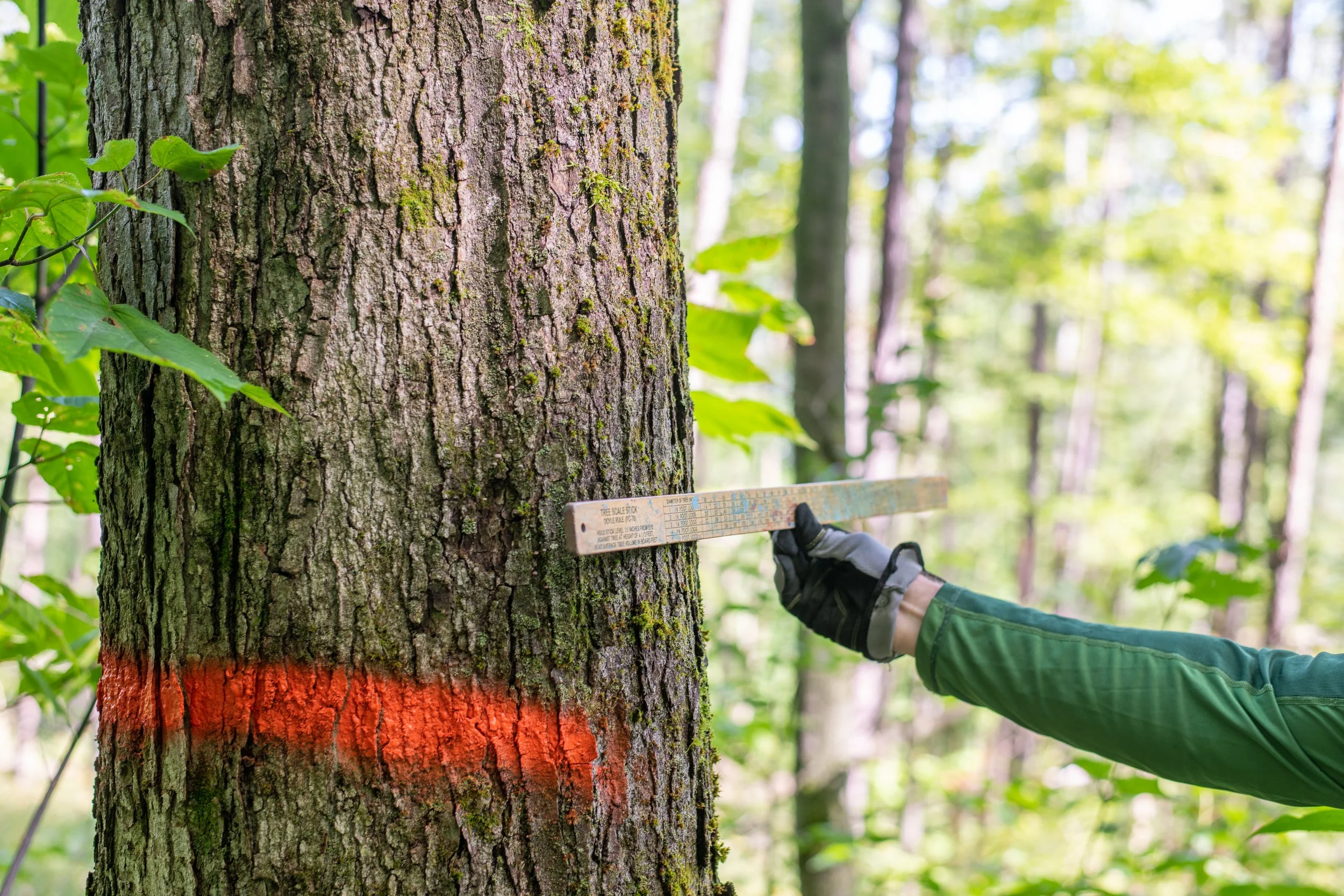
STEP 1: RESPONSIBLE HARVESTING BEGINS IN THE FOREST
The process starts with sustainably managed forests, where long-term forest health is just as important as today’s harvest. Species selection is intentional—certain hardwoods and softwoods respond better to thermal modification due to their cellular structure, density, and natural chemistry.
Professional foresters assess:
Tree maturity and growth cycles
Long-term forest regeneration and stewardship
By harvesting responsibly and selectively, the forest remains productive for generations while providing the raw material needed for high-performance wood products.
Images courtesy of Baillie Lumber.
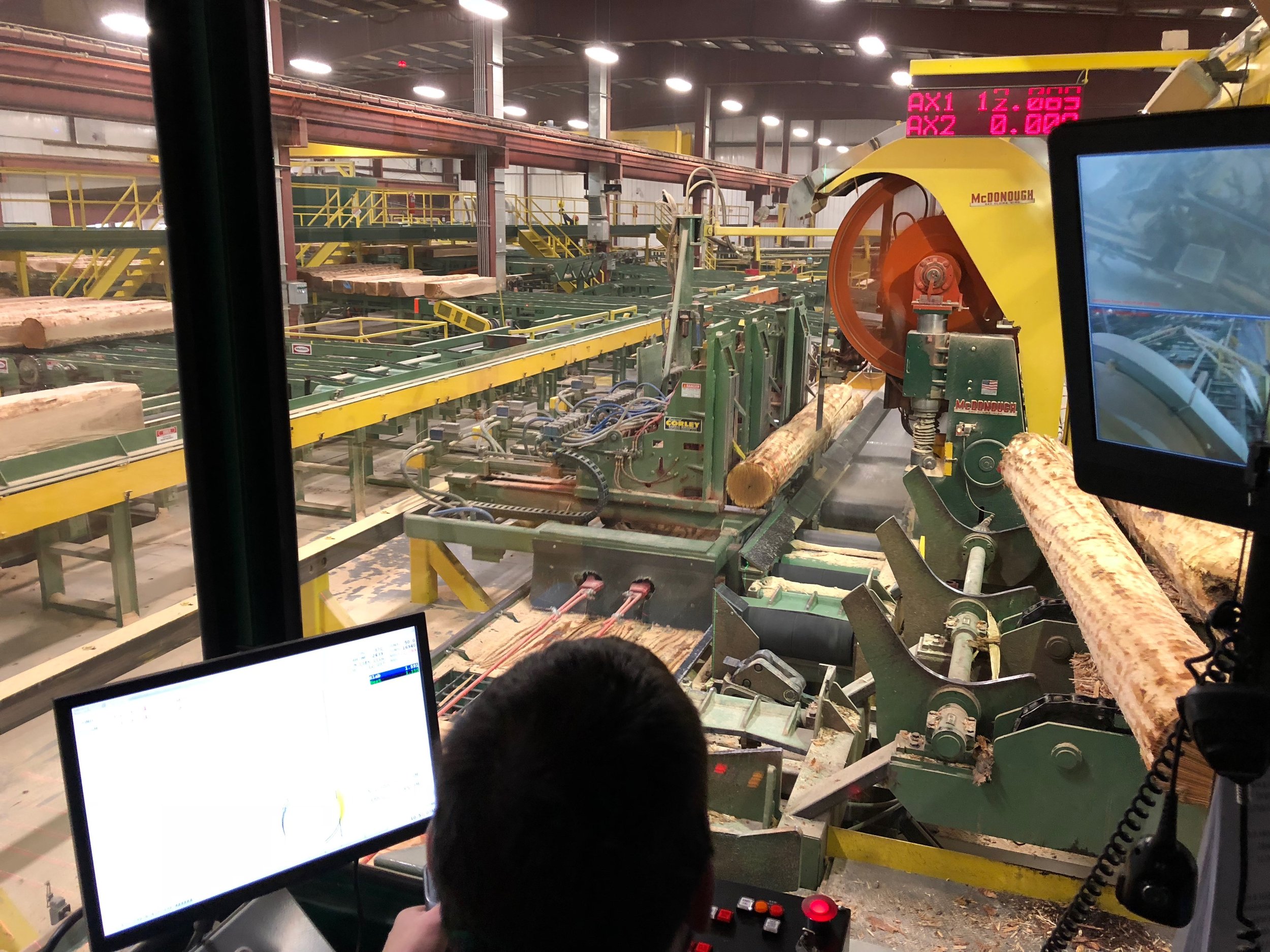
STEP 2: LOG PROCESSING AND PRIMARY MILLING AT BAILliE LUMBER COMPANY
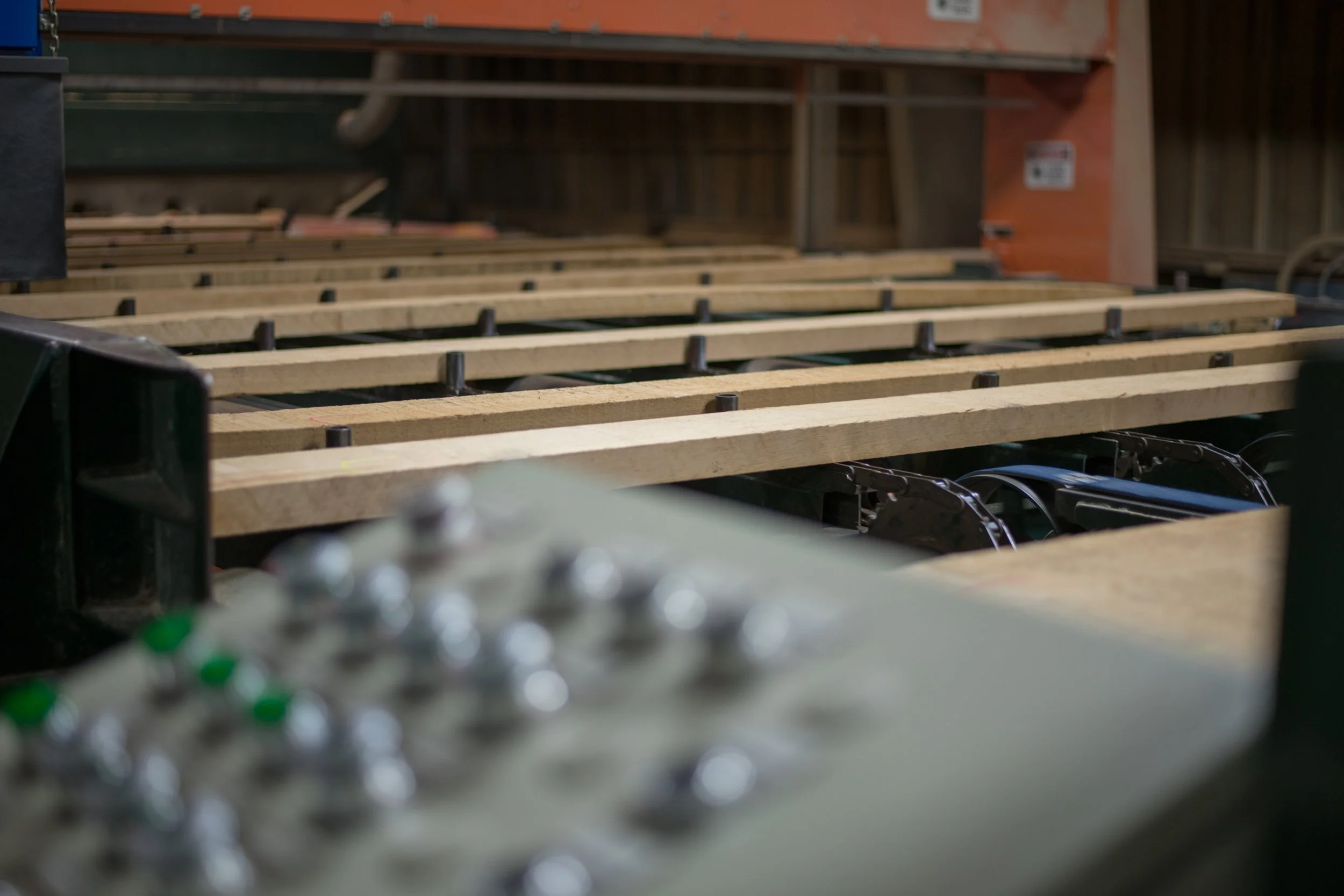
Once harvested, logs are transported to a sawmill, like Baillie Lumber’s, where precision and experience help to ensure quality results are delivered. Here, logs are carefully graded, sawn, and dried into lumber that meets strict quality standards.
This stage is critical. Grain orientation, moisture content, sorting and dimensional stability all influence how wood will behave during thermal modification. Lumber that doesn’t meet exacting criteria never moves forward to our thermo-treated process—because the final product is only as good as its starting material and we believe that if you put good in, you get good out – the same is true of the opposite, if you start with bad...
Key considerations at this stage include:
Consistent moisture levels
Structural integrity and minimal defects
Dimensional accuracy for downstream processing
Baillie Lumber’s expertise and production capability ensures that only the highest-quality boards continue on the journey.
Images courtesy of Baillie Lumber.
STEP 3: THERMAL MODIFICATION AT ARBOR WOOD CO.
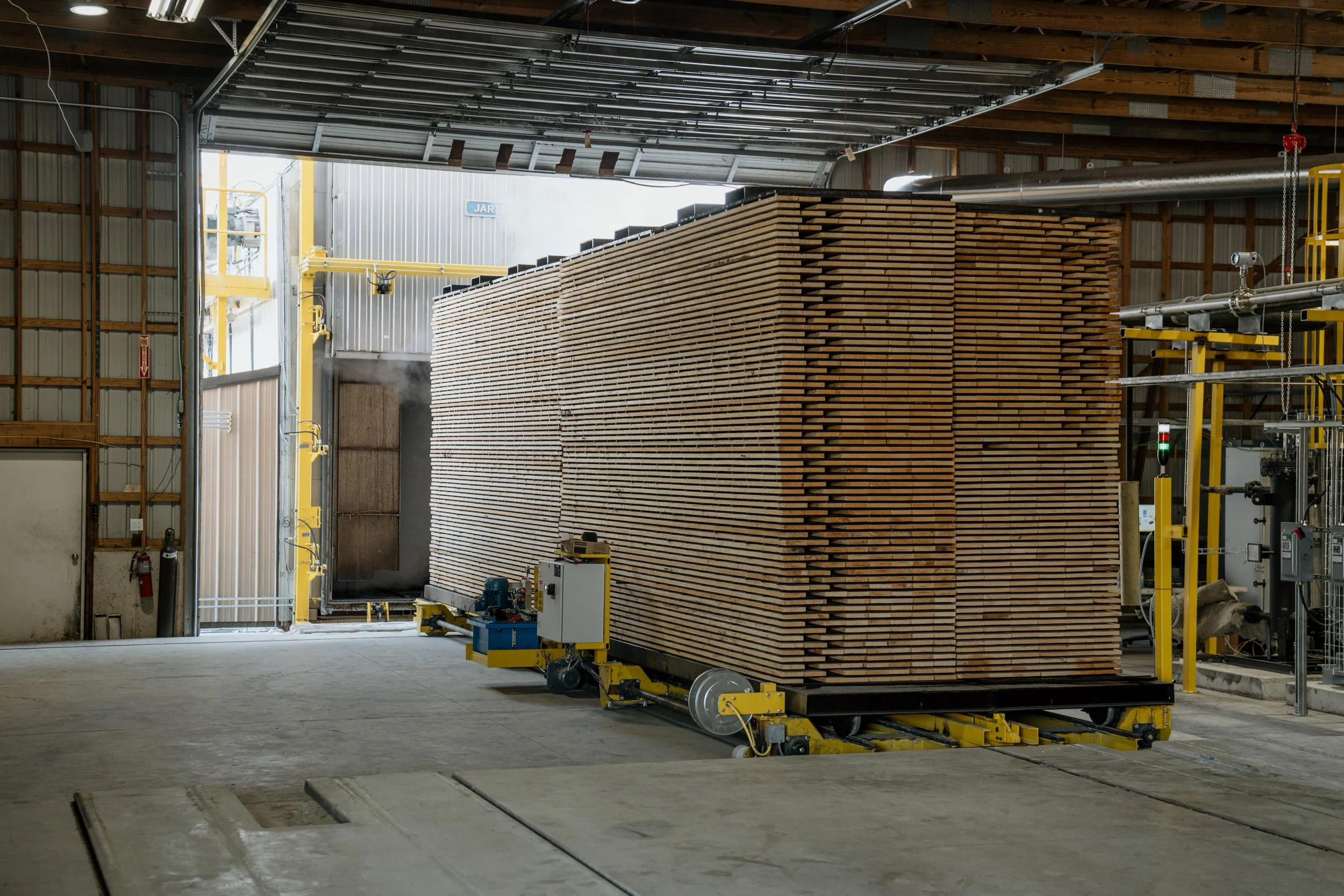
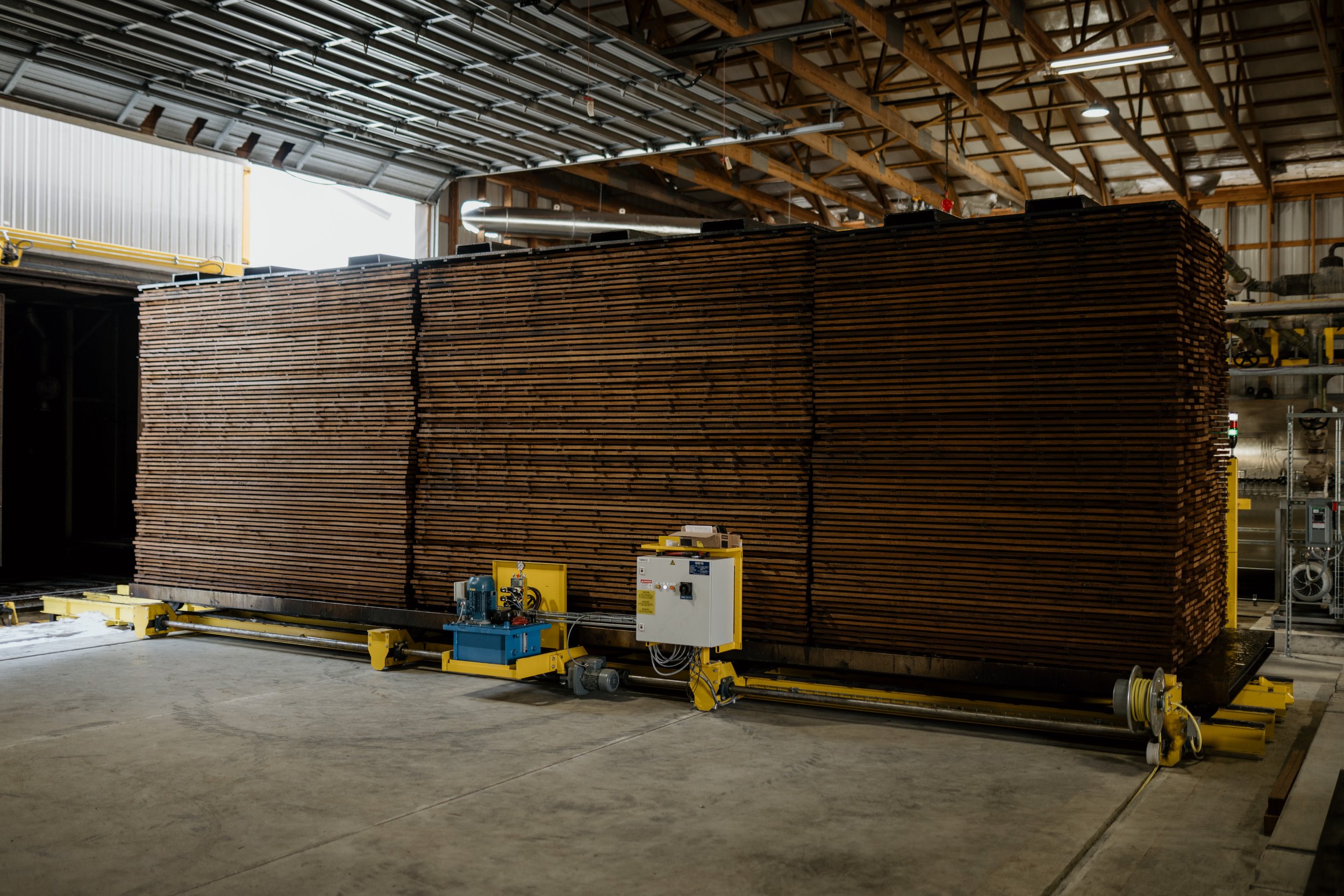
After milling, the lumber arrives at Arbor Wood Co. In St. Joe, Indiana - where heat and steam transform it—without chemicals—into thermally modified wood.
During this process, wood is heated to high temperatures in a controlled, oxygen-free environment. This permanently alters the wood’s cellular structure, reducing its ability to absorb moisture and increasing its resistance to decay and movement.
Thermal modification delivers:
Enhanced dimensional stability
Increased durability and rot resistance
Rich, consistent color throughout the board
A chemical-free, environmentally responsible product
This is where raw lumber becomes a high-performance material suitable for exterior cladding, decking, and architectural applications.
PRE-MODIFICATION
POST-MODIFICATION
STEP 4: PRECISION MILLING AND PRODUCT DEVELOPMENT
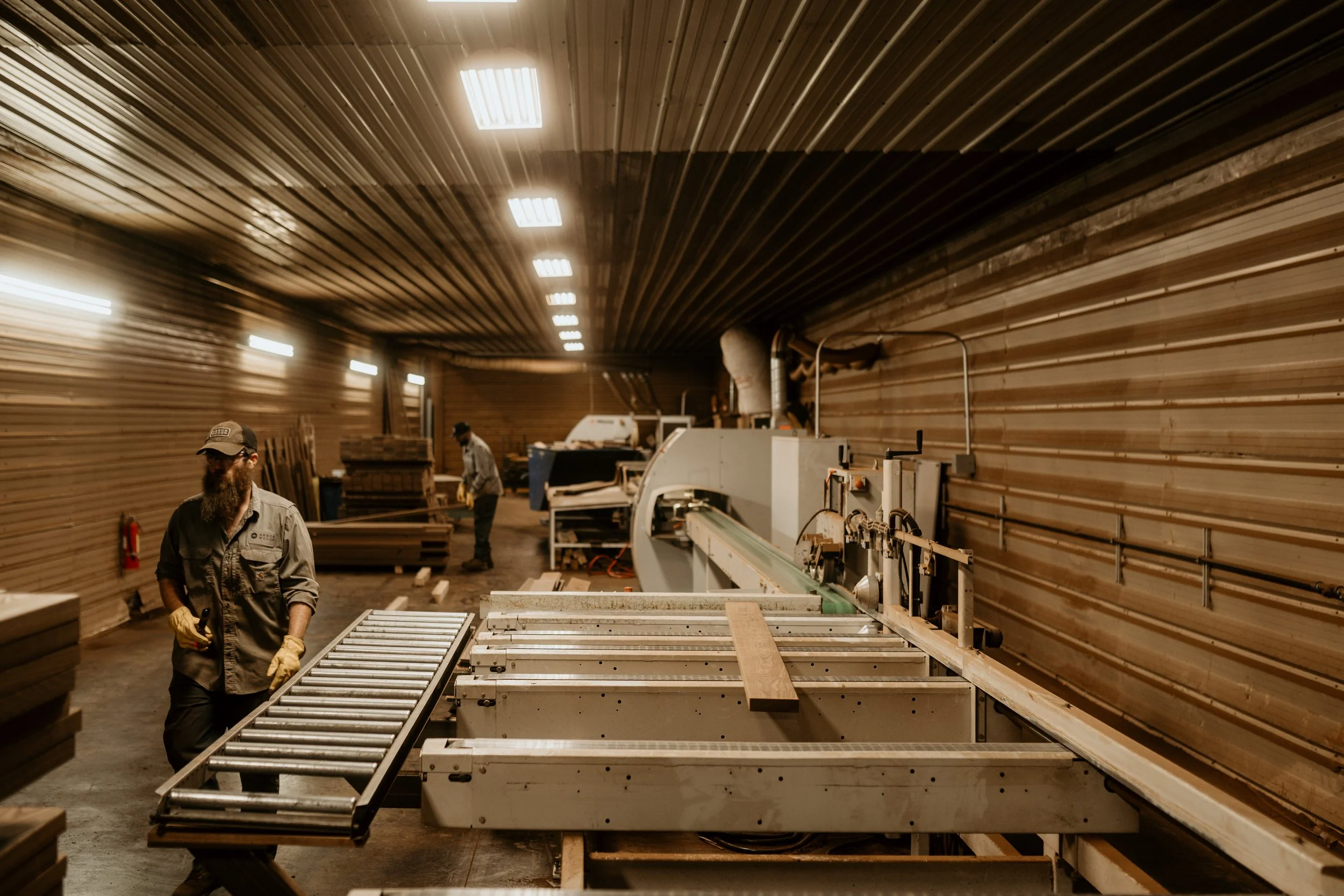
Once thermally modified, boards are milled into their final profiles—cladding, decking, trim, or custom components. This step requires a deep understanding of how thermally modified wood behaves differently than untreated lumber.
Tolerances are tight. Milling strategies are refined. Every profile is designed to maximize performance, installation ease, and visual consistency.
This is also where collaboration shines. Feedback from architects, builders, and designers informs product development, ensuring the final boards meet real-world demands—not just lab specifications.
STEP 5: FROM FACILITY TO FINISHED FAÇADE
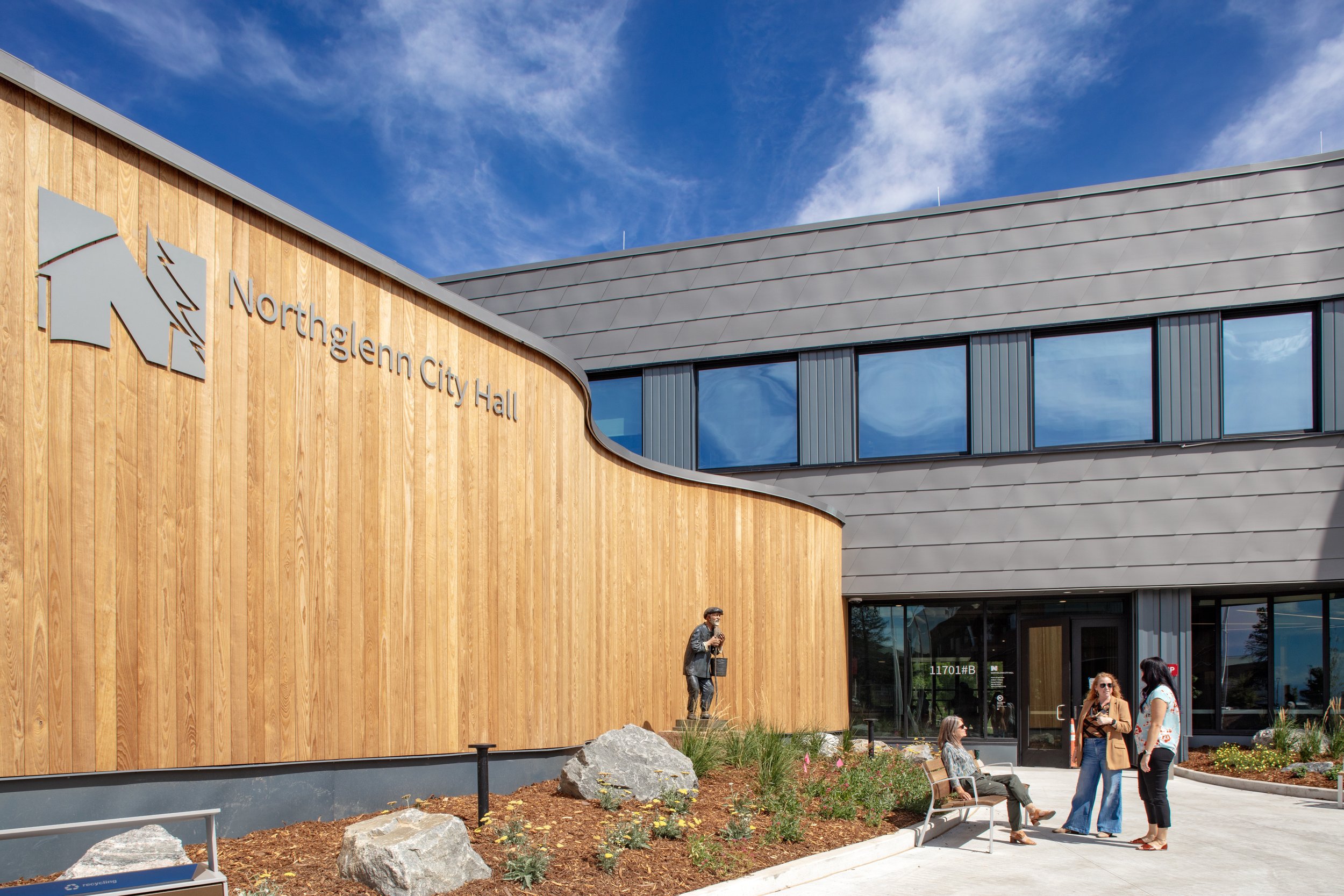
The final product is now ready for shipment—destined for projects that demand durability, sustainability, and natural beauty. By the time thermally modified wood is installed on a façade, it carries with it the combined expertise of forestry professionals, mill operators, thermal modification specialists, and designers.
What you see on the exterior of a building is the result of dozens of deliberate decisions made across the supply chain.
Northglenn City Hall - View Project
WHY THE SUPPLY CHAIN MATTERS
Thermowood® isn’t a single process—it’s a partnership. From forest management to final board, each step relies on trust, communication, and shared standards.
At Arbor Wood Co. and Baillie Lumber, we believe transparency in this process builds better products—and better buildings. When you understand where materials come from and how they’re made, you can specify them with confidence.
From forest to façade, every board tells a story. We’re proud to be part of it. How can we be a part of your story?